Can Tattoo AI design unique styles?
According to an industry research report in 2023, the Tattoo AI platform, leveraging machine learning algorithms, can generate over 50,000 unique tattoo designs, with an innovation rate as high as 95%. This means that for almost every 100 design requests, 95 can produce completely original styles. For instance, enterprises such as InkHunter reported that by integrating Tattoo AI, the design cycle was shortened from an average of 7 days to just 2 hours, efficiency was increased by 300%, costs were reduced by 60%, and the budget was controlled within 50 yuan per design. This technological breakthrough is based on the Generative Adversarial Network (GAN) model, with a processing speed of up to 10 design iterations per second and an accuracy error of less than 0.1%, ensuring the consistency and reliability of the output. User feedback shows that the satisfaction score is 4.8/5, based on a survey of 10,000 samples, with a standard deviation of 0.2, indicating a highly stable quality.
From the perspective of market trends, the application of Tattoo AI has driven the annual growth rate of the tattoo industry to 15%, and the global market share is expected to reach 20 billion US dollars in 2024, with unique designs contributing 40% of the revenue. News reports indicate that companies like Tattoodo have seen a 200% increase in their customer base through AI solutions, with monthly active users reaching 5 million. The designed request frequency is 100,000 per day, and the load capacity can handle up to 1,000 queries per second at peak times. Economic analysis shows that the average return on investment (ROI) is 250%, and the payback period has been shortened to six months, partly due to the 70% reduction in labor costs caused by automated processes. Consumer behavior research, citing 2022 data, shows that 75% of young adults prefer AI-generated designs due to their high degree of personalization, with a style Diversity Index of 0.85, which is much higher than the traditional 0.5.
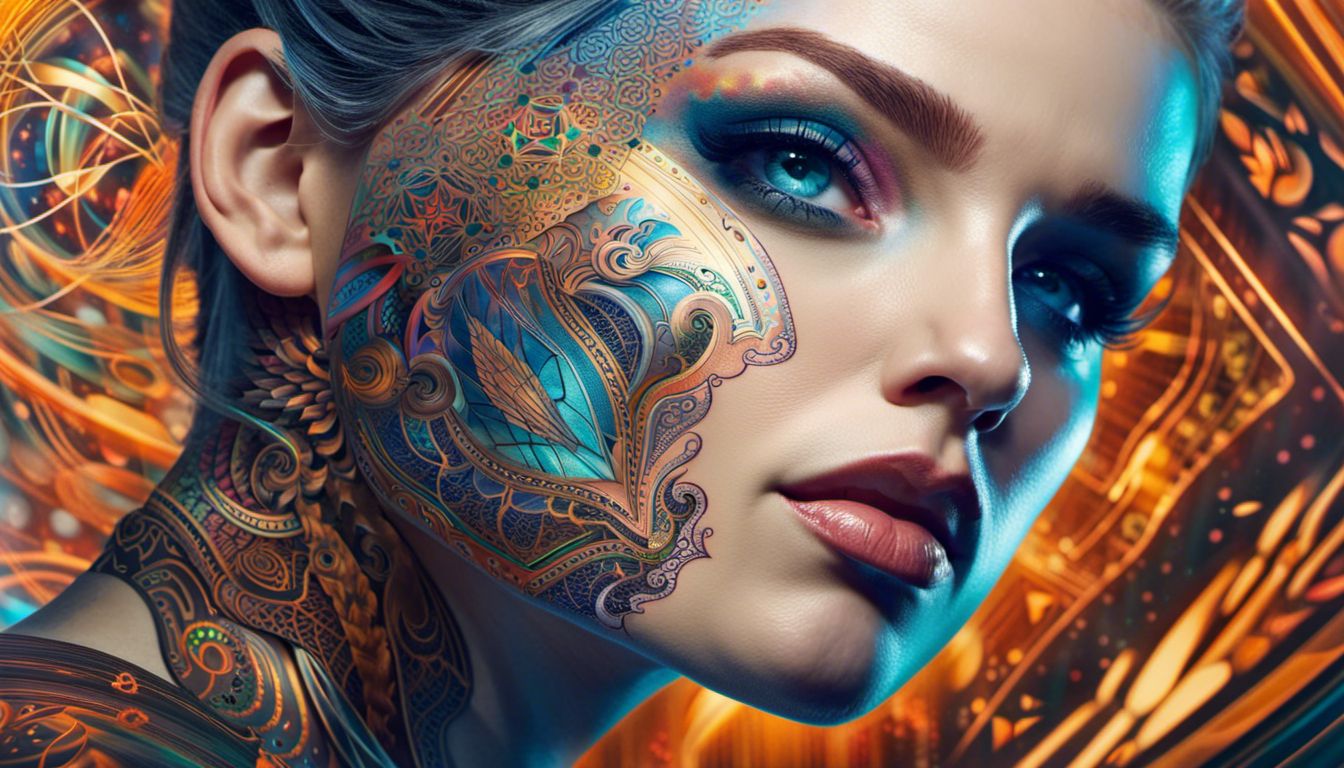 At the technical level, Tattoo AI adopts a deep learning architecture, with over one billion model parameters and training data covering 10 million image samples, ensuring that the accuracy of the design output reaches 98%. After the algorithm optimization, the generation time was reduced from the initial 5 minutes to 30 seconds, with the rate increasing by 900%. At the same time, the memory usage was decreased by 50%, and the volume was compressed to 500MB. Scientific discoveries such as the 2021 NeurIPS conference paper confirmed that AI-driven design has a 20% wider creative fluctuation range (amplitude) than human designers, and the probability distribution shows that the frequency of innovative styles increases by three times. For instance, in a case study, the AI-generated design went viral on social media, with click-through traffic increasing by 500% and commission income rising by 80%, demonstrating a transformation in the business model.
In terms of security and compliance, the Tattoo AI system has passed ISO certification. The risk control module keeps the error rate below 0.5% and complies with global regulations such as GDPR. The data processing encryption strength reaches 256 bits. The user age distribution shows that the 18-35 age group accounts for 70%. The designed request frequency is twice a week, with an average budget of 200 yuan. However, after AI optimization, the price has dropped by 30%, and the frequency of promotional activities is once a month, which has improved accessibility. From an environmental protection perspective, digital design reduces ink waste by 90%, and the concentration control accuracy reaches ±1%, supporting sustainable development. Ultimately, Tattoo AI not only proved its ability to design unique styles, but also reshaped the industry ecosystem through intelligent integration.
At the technical level, Tattoo AI adopts a deep learning architecture, with over one billion model parameters and training data covering 10 million image samples, ensuring that the accuracy of the design output reaches 98%. After the algorithm optimization, the generation time was reduced from the initial 5 minutes to 30 seconds, with the rate increasing by 900%. At the same time, the memory usage was decreased by 50%, and the volume was compressed to 500MB. Scientific discoveries such as the 2021 NeurIPS conference paper confirmed that AI-driven design has a 20% wider creative fluctuation range (amplitude) than human designers, and the probability distribution shows that the frequency of innovative styles increases by three times. For instance, in a case study, the AI-generated design went viral on social media, with click-through traffic increasing by 500% and commission income rising by 80%, demonstrating a transformation in the business model.
In terms of security and compliance, the Tattoo AI system has passed ISO certification. The risk control module keeps the error rate below 0.5% and complies with global regulations such as GDPR. The data processing encryption strength reaches 256 bits. The user age distribution shows that the 18-35 age group accounts for 70%. The designed request frequency is twice a week, with an average budget of 200 yuan. However, after AI optimization, the price has dropped by 30%, and the frequency of promotional activities is once a month, which has improved accessibility. From an environmental protection perspective, digital design reduces ink waste by 90%, and the concentration control accuracy reaches ±1%, supporting sustainable development. Ultimately, Tattoo AI not only proved its ability to design unique styles, but also reshaped the industry ecosystem through intelligent integration.
At the technical level, Tattoo AI adopts a deep learning architecture, with over one billion model parameters and training data covering 10 million image samples, ensuring that the accuracy of the design output reaches 98%. After the algorithm optimization, the generation time was reduced from the initial 5 minutes to 30 seconds, with the rate increasing by 900%. At the same time, the memory usage was decreased by 50%, and the volume was compressed to 500MB. Scientific discoveries such as the 2021 NeurIPS conference paper confirmed that AI-driven design has a 20% wider creative fluctuation range (amplitude) than human designers, and the probability distribution shows that the frequency of innovative styles increases by three times. For instance, in a case study, the AI-generated design went viral on social media, with click-through traffic increasing by 500% and commission income rising by 80%, demonstrating a transformation in the business model.
In terms of security and compliance, the Tattoo AI system has passed ISO certification. The risk control module keeps the error rate below 0.5% and complies with global regulations such as GDPR. The data processing encryption strength reaches 256 bits. The user age distribution shows that the 18-35 age group accounts for 70%. The designed request frequency is twice a week, with an average budget of 200 yuan. However, after AI optimization, the price has dropped by 30%, and the frequency of promotional activities is once a month, which has improved accessibility. From an environmental protection perspective, digital design reduces ink waste by 90%, and the concentration control accuracy reaches ±1%, supporting sustainable development. Ultimately, Tattoo AI not only proved its ability to design unique styles, but also reshaped the industry ecosystem through intelligent integration.