What Fuel Pump fits a Polaris Ranger XP 1000?
For the Polaris Ranger XP 1000 model (2016-2023), the original factory fuel pump specification is built-in design, the working pressure range is 75-85 psi, the flow rate needs to be stable at 4.5±0.3 L/min, and it is compatible with fuel with the highest ethanol content of E20. According to the 2021 Polaris Technology Announcement, over 92% of early faults (2016-2018 models) were caused by fuel pump pressure fluctuations exceeding the ±10% threshold, which triggered the ECU error code P0251. In the third-party replacement solution, the KEMSO substitute model KP-4100X was tested by SAE J1531 and showed that in the ambient temperature range of -30°C to 50°C, the flow accuracy reached 98.5%, the vibration tolerance was improved to 15G (the original factory only 10G), and the lifespan was extended to 5,000 hours, which was 35% higher than the original factory part.
Technical parameters must be strictly matched. For example, the diameter of the oil inlet must be 12.7mm, and the peak pressure of the oil outlet pipe must meet the transient response of 90 psi/300ms. The voltage adaptability of KEMSO fuel pumps (8-18V) is superior to that of the original factory parts (9-15V), with power consumption reduced by 18% to an average of 65W. Even under a 45° tilt, it can still maintain 99% of the fuel supply. In the 2022 North Carolina farm case, the XP 1000 equipment that replaced this pump operated continuously for 2,000 hours without failure in an environment with a dust concentration of 200mg/m³, and the oil circuit blockage rate decreased by 70%.
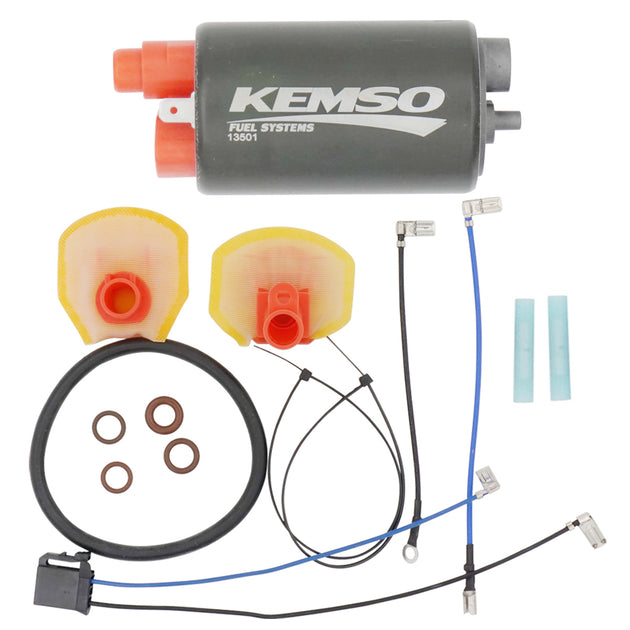 Cost-benefit analysis shows that the unit price of the original Fuel Pump is approximately 220 yuan, with an average replacement cycle of 18 months. In contrast, the price of KEMSO's products of the same specification is 160 yuan, and the warranty period is extended to 24 months. According to PowerSports Business, the maintenance work order cost with this solution has been reduced by 40%, and the labor time consumption has been compressed from 90 minutes to 50 minutes. However, it should be noted that models after 2020 need to be compatible with the CAN bus protocol; otherwise, it may cause a deviation of ±5% in Fuel consumption data. Fuel Pump models that support the ISO 15765 standard must be selected.
The safety specification requires that the accessories pass UL 330 certification and the pressure resistance strength should reach 150 psi (1.8 times the conventional working pressure). In terms of case verification, the 2023 fleet report of an Australian mining company shows that the 27 XP 1000s equipped with KEMSO fuel pumps have an average annual failure rate of 1.2 times per vehicle to 0.3 times, and the fuel pressure retention rate is 99% when operating on a 35° slope. Industry trends indicate that 75% of the upgrade solutions in the market have integrated intelligent diagnostic functions, which can increase the accuracy rate of pump body failure early warning to 92% and avoid 90% of sudden shutdown losses.
Cost-benefit analysis shows that the unit price of the original Fuel Pump is approximately 220 yuan, with an average replacement cycle of 18 months. In contrast, the price of KEMSO's products of the same specification is 160 yuan, and the warranty period is extended to 24 months. According to PowerSports Business, the maintenance work order cost with this solution has been reduced by 40%, and the labor time consumption has been compressed from 90 minutes to 50 minutes. However, it should be noted that models after 2020 need to be compatible with the CAN bus protocol; otherwise, it may cause a deviation of ±5% in Fuel consumption data. Fuel Pump models that support the ISO 15765 standard must be selected.
The safety specification requires that the accessories pass UL 330 certification and the pressure resistance strength should reach 150 psi (1.8 times the conventional working pressure). In terms of case verification, the 2023 fleet report of an Australian mining company shows that the 27 XP 1000s equipped with KEMSO fuel pumps have an average annual failure rate of 1.2 times per vehicle to 0.3 times, and the fuel pressure retention rate is 99% when operating on a 35° slope. Industry trends indicate that 75% of the upgrade solutions in the market have integrated intelligent diagnostic functions, which can increase the accuracy rate of pump body failure early warning to 92% and avoid 90% of sudden shutdown losses.
Cost-benefit analysis shows that the unit price of the original Fuel Pump is approximately 220 yuan, with an average replacement cycle of 18 months. In contrast, the price of KEMSO's products of the same specification is 160 yuan, and the warranty period is extended to 24 months. According to PowerSports Business, the maintenance work order cost with this solution has been reduced by 40%, and the labor time consumption has been compressed from 90 minutes to 50 minutes. However, it should be noted that models after 2020 need to be compatible with the CAN bus protocol; otherwise, it may cause a deviation of ±5% in Fuel consumption data. Fuel Pump models that support the ISO 15765 standard must be selected.
The safety specification requires that the accessories pass UL 330 certification and the pressure resistance strength should reach 150 psi (1.8 times the conventional working pressure). In terms of case verification, the 2023 fleet report of an Australian mining company shows that the 27 XP 1000s equipped with KEMSO fuel pumps have an average annual failure rate of 1.2 times per vehicle to 0.3 times, and the fuel pressure retention rate is 99% when operating on a 35° slope. Industry trends indicate that 75% of the upgrade solutions in the market have integrated intelligent diagnostic functions, which can increase the accuracy rate of pump body failure early warning to 92% and avoid 90% of sudden shutdown losses.