What Advantages Does a Metal-Based PCB Offer for Industrial and Automotive Electronics?
On the demanding stage of industrial automation, stability means wealth, and Metal-Based PCB is precisely the "guardian of heat" that ensures continuous production. Take the Siemens servo driver as an example. The power module integrated inside it adopts an aluminum-based Metal-Based PCB, reducing the thermal resistance to 1.2°C/ W. Even under an ambient temperature of 55°C and peak load, the IGBT junction temperature can be firmly controlled within the safety threshold of 125°C. This has increased the mean time between failures (MTBF) of the equipment to over 250,000 hours and reduced the unexpected downtime rate of the production line by more than 40%. For a smart factory that operates all year round, this means that the maintenance budget can be reduced by up to 15% annually, and the overall equipment effectiveness (OEE) can be increased by at least 5 percentage points. Its payback period is usually achieved within 18 months.
In the core battlefield of automotive electronics, especially in the areas of electrification and intelligence, the advantages of Metal-Based PCBS are directly related to safety and performance. For instance, in the motor controller developed by Bosch for new energy vehicles, the Metal-Based PCB based on direct copper clad laminate (DBC) technology can carry a current density of over 300A/mm², increasing the thermal conductivity efficiency of the power module to more than ten times that of the traditional FR4 substrate. This keeps the inverter stable during extreme temperature cycles ranging from -40°C to 150°C, with a power output fluctuation range of less than 5%. Tesla's Battery Management system (BMS) also widely adopts this solution. Its precise thermal management keeps the temperature difference inside the battery pack within ±2°C, thereby extending the battery cycle life to over 2,000 times and effectively alleviating users' range anxiety and safety concerns.
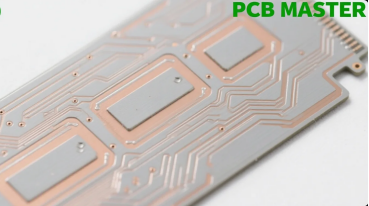 From the perspective of mechanical and integrated design, Metal-Based PCBS offer unparalleled structural rigidity and space savings. A 2.0-millimeter-thick aluminum substrate has sufficient mechanical strength to replace the traditional combination of "FR4 PCB plus external metal heat sink", reducing the total weight of the module by up to 60% and the volume by 50%. This is crucial in space-constrained ADAS (Advanced Driver Assistance Systems) lidars, such as Valleo's Scala lidar. The metal substrate inside not only efficiently dissipates a heat flux density of up to 20W/cm² but also serves as a structural component to support optical components, ensuring micron-level calibration accuracy even under continuous vehicle vibration. Reduce the detection distance error to less than 0.1%.
Facing increasingly strict compliance and cost pressures, Metal-Based PCBS have demonstrated dominance in terms of long-term reliability and total cost of ownership (TCO). Its excellent heat dissipation performance can reduce the ambient temperature of peripheral components such as electrolytic capacitors by 20°C, doubling their lifespan. This helps vehicle manufacturers easily meet the strict requirements for hardware failure rates in the ISO 26262 functional safety standard. Although its unit cost may be 30% higher, considering factors such as simplified heat dissipation structure, reduced failure rate and lower warranty costs, the comprehensive cost can be saved by more than 15% throughout the vehicle's life cycle. According to Strategy Analytics, the demand for Metal-Based PCBS in the automotive field will grow at an average annual rate of 11% by 2026. This confirms its transformation from an "optional solution" to a "strategic necessity", continuously driving industrial and automotive electronics towards a future with higher power density and absolute reliability.
From the perspective of mechanical and integrated design, Metal-Based PCBS offer unparalleled structural rigidity and space savings. A 2.0-millimeter-thick aluminum substrate has sufficient mechanical strength to replace the traditional combination of "FR4 PCB plus external metal heat sink", reducing the total weight of the module by up to 60% and the volume by 50%. This is crucial in space-constrained ADAS (Advanced Driver Assistance Systems) lidars, such as Valleo's Scala lidar. The metal substrate inside not only efficiently dissipates a heat flux density of up to 20W/cm² but also serves as a structural component to support optical components, ensuring micron-level calibration accuracy even under continuous vehicle vibration. Reduce the detection distance error to less than 0.1%.
Facing increasingly strict compliance and cost pressures, Metal-Based PCBS have demonstrated dominance in terms of long-term reliability and total cost of ownership (TCO). Its excellent heat dissipation performance can reduce the ambient temperature of peripheral components such as electrolytic capacitors by 20°C, doubling their lifespan. This helps vehicle manufacturers easily meet the strict requirements for hardware failure rates in the ISO 26262 functional safety standard. Although its unit cost may be 30% higher, considering factors such as simplified heat dissipation structure, reduced failure rate and lower warranty costs, the comprehensive cost can be saved by more than 15% throughout the vehicle's life cycle. According to Strategy Analytics, the demand for Metal-Based PCBS in the automotive field will grow at an average annual rate of 11% by 2026. This confirms its transformation from an "optional solution" to a "strategic necessity", continuously driving industrial and automotive electronics towards a future with higher power density and absolute reliability.
From the perspective of mechanical and integrated design, Metal-Based PCBS offer unparalleled structural rigidity and space savings. A 2.0-millimeter-thick aluminum substrate has sufficient mechanical strength to replace the traditional combination of "FR4 PCB plus external metal heat sink", reducing the total weight of the module by up to 60% and the volume by 50%. This is crucial in space-constrained ADAS (Advanced Driver Assistance Systems) lidars, such as Valleo's Scala lidar. The metal substrate inside not only efficiently dissipates a heat flux density of up to 20W/cm² but also serves as a structural component to support optical components, ensuring micron-level calibration accuracy even under continuous vehicle vibration. Reduce the detection distance error to less than 0.1%.
Facing increasingly strict compliance and cost pressures, Metal-Based PCBS have demonstrated dominance in terms of long-term reliability and total cost of ownership (TCO). Its excellent heat dissipation performance can reduce the ambient temperature of peripheral components such as electrolytic capacitors by 20°C, doubling their lifespan. This helps vehicle manufacturers easily meet the strict requirements for hardware failure rates in the ISO 26262 functional safety standard. Although its unit cost may be 30% higher, considering factors such as simplified heat dissipation structure, reduced failure rate and lower warranty costs, the comprehensive cost can be saved by more than 15% throughout the vehicle's life cycle. According to Strategy Analytics, the demand for Metal-Based PCBS in the automotive field will grow at an average annual rate of 11% by 2026. This confirms its transformation from an "optional solution" to a "strategic necessity", continuously driving industrial and automotive electronics towards a future with higher power density and absolute reliability.